

Each year we sign up for CSA (Community Supported Agriculture), which is designed to bring farmers and consumers closer together. We pay the farmer to buy their produce and during the growing season pick up a weekly box of freshly harvested and washed vegetables. It’s delightful. The organic farmer we contracted calls their place, “Farm Farm,” which makes us wonder if it was named by their toddler.
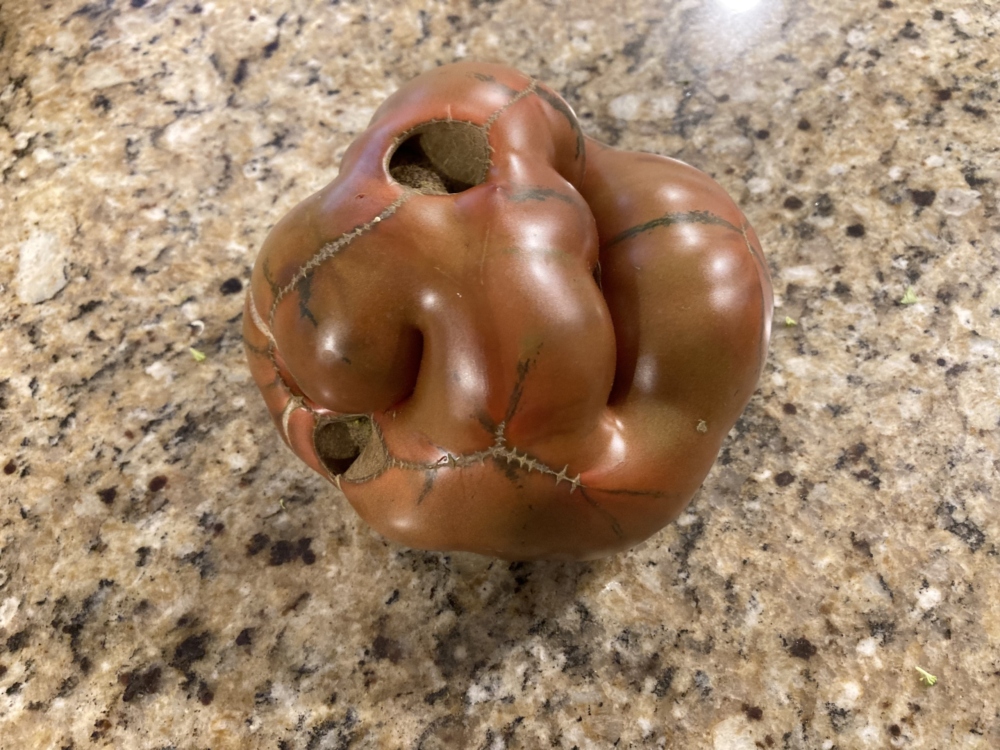
This past week a huge Heirloom tomato greeted us when we opened the Farm Farm box. Gnarled and misshapen, it looks fiercely delicious. It may not be the prettiest tomato in the field, but it’s bound to be delectable. I’ve eaten heirloom varieties from Farm Farm before. We haven’t eaten this one yet, but I would guess we will use it in tomato sandwiches. Two slices of fresh bakery bread, generous slices of tomato, lavish mayonnaise, salt and pepper—and if we are ambitious, a couple of slices of crisp bacon. A sandwich like that can make me speechless.
When I first saw the tomato my mind went to God’s comment to the prophet Samuel, that “the Lord does not see as mortals see; they look on the outward appearance, but the Lord looks on the heart” [1 Samuel 16:7]. But that has absolutely nothing to do with vegetables. (I looked it up.) But no worries. Organic locally grown tomatoes do not need proof texts.
There is an abstract quality, some visual irony to our tomato. Lovely color and strange folds, holes and lines. It’s even possible to look at it and wonder if it actually is a tomato. There is even the appearance of surgery done, with the fissures stitched shut. Is it possible we are seeing evidence of suffering during growth? I can understand why a scientist might spend a delightful career figuring out how all that comes together in a garden or greenhouse or field.
God’s creative, imaginative handiwork is awe-inspiring, even in broken world.
Photo credit: picture taken in our kitchen with the author’s iPhone.

