

PowerPoint (originally called Presenter) was released in 1987. I was 40 years old at the time. I took to the program eagerly and began using it in presentations, lectures, conferences, and classes that I was teaching and leading. It fit my way of thinking. Taking any topic, PowerPoint allowed me to break it down into its constituent parts, make sense of it, and show how it matters to daily life. I make no apology for that and would argue that this is what PowerPoint is designed to do.
I still remember the first time I used PowerPoint to accompany a lecture I gave at a national L’Abri Conference. Up to that point, every speaker had placed an simple typed outline of their talk on the huge screen in front. Effective, but hardly titillating. My PowerPoint presentation enabled me to illustrate the points I was making with images, movie clips, music, and so much more. After I was done, other speakers demanded, “What was THAT!” The next year everyone was using PowerPoint. And it was good.
And PowerPoint is good. I give thanks to God for it. But it has a serious drawback. It’s great for knowledge but lousy at wisdom.
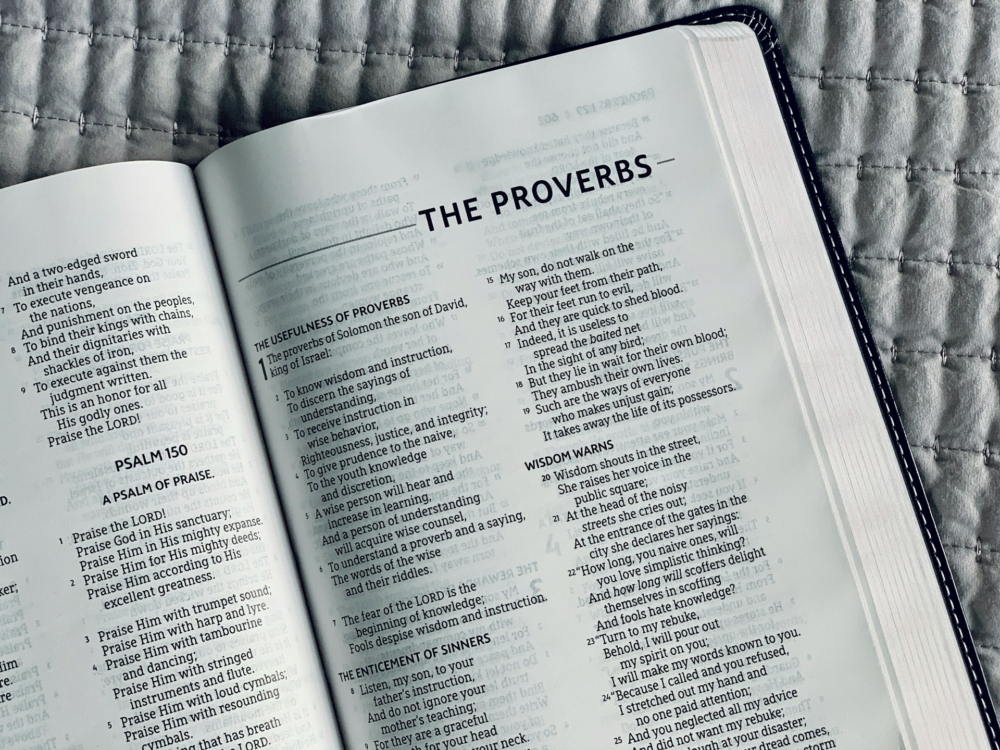
Knowledge breaks down nicely into points to remember. Wisdom doesn’t. Wisdom is expressed in stories, riddles, poetry, cryptic sayings, proverbs, and following a master. It needs to be lived in, absorbed, puzzled over, and wondered at.
I am not writing this as a criticism of PowerPoint. It’s an excellent tool for explaining and teaching knowledge that needs to be known. The problem is that PowerPoint illustrates a mentality that defines most of us. If I need to know something, just tell me. Clear points leading to clear conclusion. Done. On to the next task.
That’s fine for knowledge, and the Lord knows I need all the knowledge I can get.
But I also need wisdom—actually, I need wisdom more—and wisdom can not be reduced to PowerPoint clarity. Not because wisdom is unclear, but because it involves reality that is deeper, far deeper, than points about facts. Points can be discussed, dissected, debated, and listed. Wisdom, in contrast, is a way of seeing that puts all possible points in wider perspective.
I am convinced that finite, fallen creatures like us are unable to generate wisdom on our own. We are too small, too broken. Even if we add all of us together it will be insufficient. I know this is debated by good people, some much brighter and better educated than me. But I still believe it. I am also convinced that the cosmos of matter and energy does not throw up wisdom out of itself. Wisdom is personal and eternal, not material and transient.
To grow in wisdom, we need a source that transcends both time and space. Transcending time requires a long, historic, noble tradition of wisdom in which we can live. A tradition fleshed out, proved, and thought about for centuries. Transcending space requires intervention from beyond the narrow horizons of the finite in which we move and have our being. This is called revelation, and though some imagine it to be an illusion, it is actually more reliable than eye-witness reports. As mystics, poets, prophets, and believers know, God has spoken in a way we can understand. Not exhaustively, of course—he remains infinite and we finite—but he has spoken in creation, in Scripture, in God’s Word, and in Christ’s Church so that we are not endlessly lost in a swirl of confusion.
This is one reason I am a follower of Jesus. As God’s Son he is The Word, both caps essential. Jesus is the living word of God, and in him, St Paul says, “are hidden all the treasures of wisdom” (Colossians 2:3).
There is an ancient, proven wisdom tradition unfolded in Scripture and the Church. And in Jesus we have the necessary master to follow and revelation from beyond.
Photo credit: Photo by Tim Wildsmith on Unsplash

